
Essential Oil Wheel For Your Reference Library
When you know, you know better!
No two essential oils are alike in their structure, and each oil is comprised of a combination of hundreds - even thousands - of different natural chemicals.
The average essential oil may contain anywhere from 80 to 400 known chemical constituents.
While synthetic antibiotics often contain only one active chemical, allowing bacteria (like MRSA) to mutate to survive the attack, the large and varied number of antiseptic and antibacterial constituents in essential oils makes it impossible for bacteria to mutate enough to survive them all.
This is what makes essential oils such effective, natural antibiotics. EOs can be subdivided into two distinct groups of chemical constituents:
Hydrocarbons:
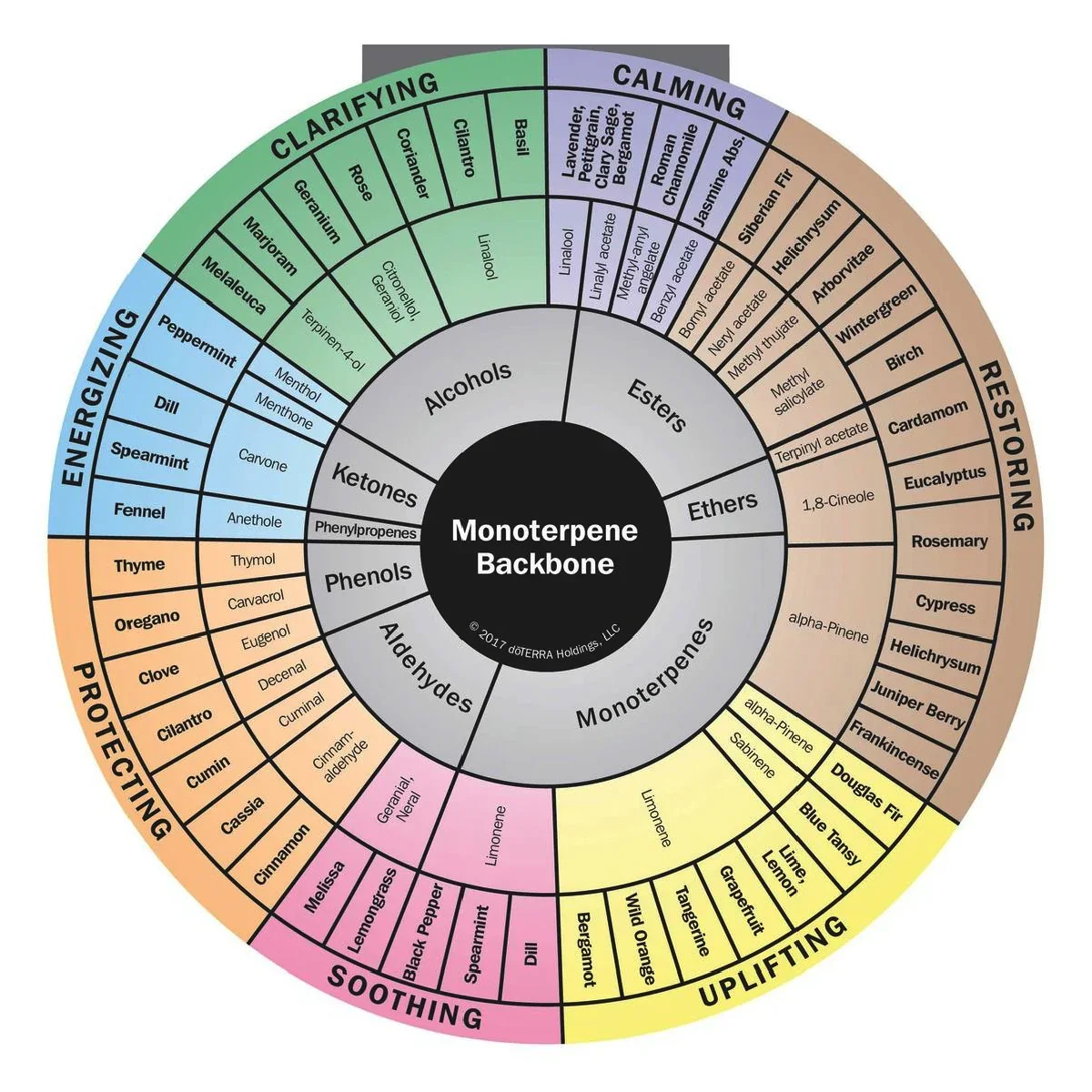
Made of terpenes, which inhibit the accumulation of
toxins and help discharge existing toxins from the
liver and kidneys. Key terpenes are:
🌿 Monoterpenes – (Found in Grapefruit, Orange,
and Silver Fir) Inhibit accumulation of toxins, detoxify, enhance balance, restore information in DNA.
🌿 Sesquiterpenes – (Found in Frankincense, Sandalwood and Myrrh) Antiseptic, anti-inflammatory, stimulate liver, increase oxygenation around the
pineal and pituitary glands, can surpass the
blood-brain barrier and enter the brain tissue.
Oxygenated Compounds Include
🌀 Alcohols (found in Ravensara, Rosewood, Geranium) – Uplifting, high resistance to oxidation, antiseptic, antiviral, revert cells to normal function.
🌀 Aldehydes (found in Cinnamon Bark, Lemongrass) - Calming, relieve stress and blood pressure, sedative, antiviral, anti-inflammatory.
🌀 Esters (found in Lavender, Bergamot, Valerian, and Roman Chamomile) - Balancing, relaxing, and calming, anti-fungal, anti-inflammatory, and anti-spasmodic.
🌀 Ketones (found in Patchouli, Rosemary, Spearmint) - Calming, sedative, stimulate cell and tissue regeneration, liquefy mucous.
🌀 Oxides – (Found in Ravensara, Rosemary, and Eucalyptus) derived from other compounds such as alcohols, terpenes, or ketones which have been oxidized. Can be mildly stimulating.
🌀 Phenols (found in Oregano, Thyme, Clove, and Melaleuca) - Stimulating to the nervous and immune systems, highly antimicrobial, antioxidant, and cleans cell receptors.
Learn More…

Healing starts at the cellular level and it’s powered by energy. Discover how essential oils support your body’s natural voltage, restore balance, and promote holistic healing through vibrational medicine.